It's that time of year again! It's harvest time on the rolling hills of the Palouse - the time when we're hard to get a hold of, but it's OK, because you know we're out working hard bringing you some of the finest whole grains and legumes. It's long hours, hot days and dusty afternoons (see below), but we wouldn't change it for the world. We love harvest.
We have so much to be grateful for - an amazing crew that's hard working and dedicated, equipment that runs and a crop to harvest, to name a few.
Above you see our two combines emptying into a bankout wagon, which is essentially a tractor pulling a specialized trailer that's equipped with an auger so it can safely haul the load of grain over the rolling hills to the grain bins. There, the grain will be loaded into a truck for transport (below) or straight into one of our farm's bins for storage.
We still have a couple more weeks of harvest to go. We're doing our best to get orders shipped out in a timely manner, but if you get the voicemail when you call, you'll know we're harvesting.
Showing posts with label Farming. Show all posts
Tuesday, August 2, 2016
Thursday, May 12, 2016
Farm Update
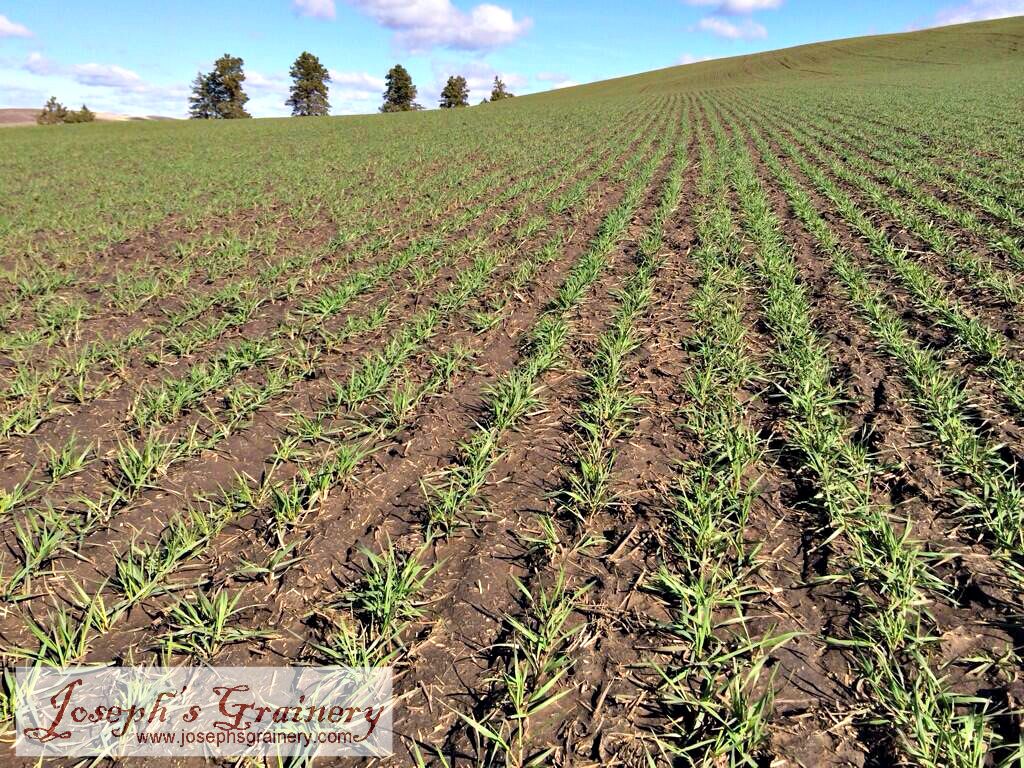
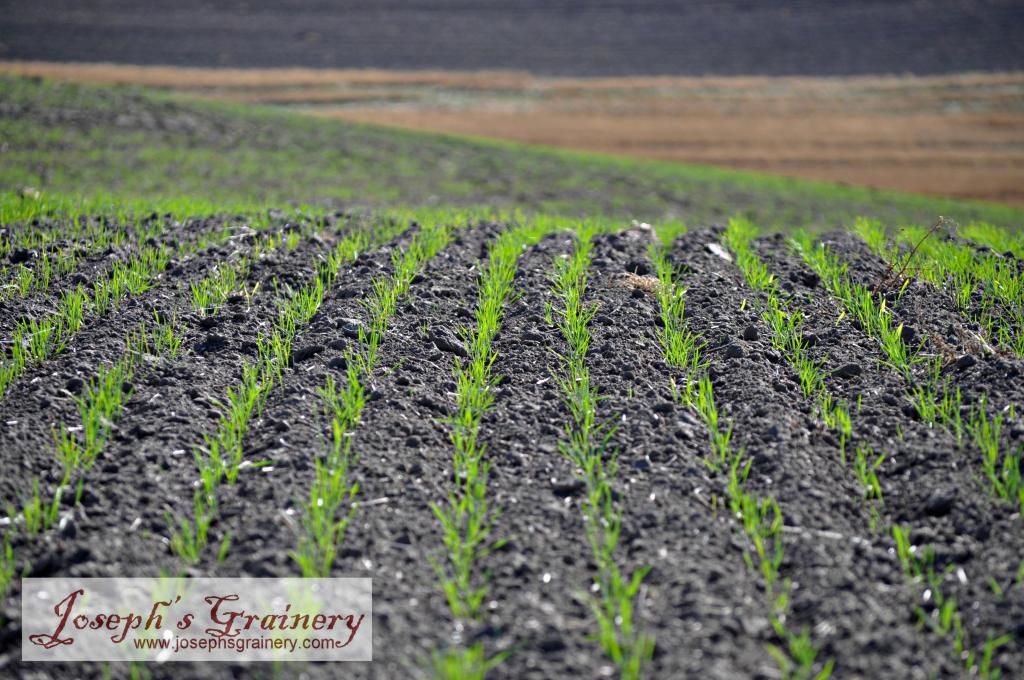
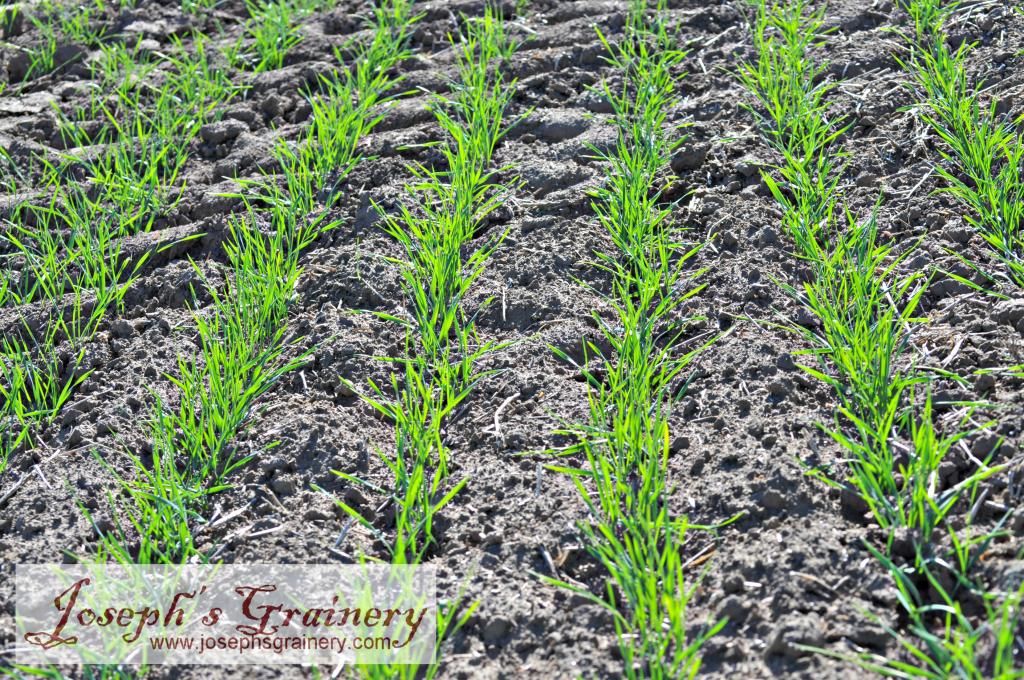
The crops have grown quite a bit since we last shared a Farm Update with you, so we thought you might like to see how the Joseph's Grainery Barley has grown since we last checked in...
It'll continue to grow for another couple of months before we harvest it in late July or early August. Then you'll see barley from this field on the shelves, shipped to your door or even in some local beer come this Fall.
Speaking of local beer, it was great to meet many of you at the Palouse Pint Showcase! For those who didn't get to attend, here are a few photos from the event:
Tuesday, July 14, 2015
2015 Palouse Wheat Harvest
It's time! We've begun to harvest the 2015 crop of wheat here on the rolling hills of the Palouse. Here are a couple "fresh from the farm" photos taken just a few moments ago.
It's a hot and very busy time of year for our crew. They put in long hours to make sure the crops get in a timely manner, but it's also our favorite time of year...
We get to see the bounty of the harvest. We get to reap what was sown months ago.
*Because harvest is an "all hands on deck" time for us on the farm, the best way to get a hold of us for the next couple of weeks if you have any questions will be via e-mail.
Monday, June 29, 2015
Harvest On The Palouse Is Drawing Near
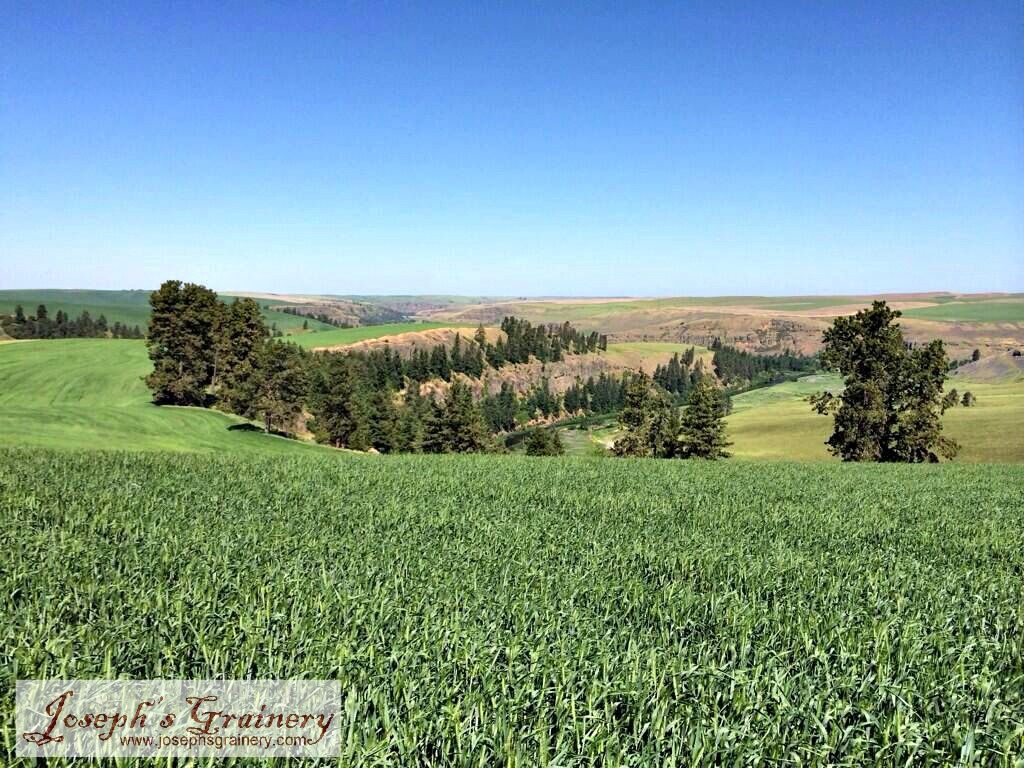
Do you understand now why they are called the Rolling Hills of the Palouse? The trees in the center of the photo are following along the Palouse River Valley.
Looking from the sky, you can see the various crops in their different stages of ripening. You're probably wondering, why the fields are laid out in such an unusual manner? Well, they follow the topography of the hills. Laying your fields out in such a manner is called Contour Cropping and helps reduce soil erosion on the steep hillsides. This is an example of a agricultural practice we use to be good stewards of the land.
Here is the 2015 Crop of Joseph's Grainery Barley. The barley is turning from green to gold and will be ripe and ready to harvest in a couple of weeks.
Order the best grain and legume products in the world right here. You can rely on the Joseph's Grainery brand for the highest quality and purity. From Our Farm To Your Table.
Wednesday, March 18, 2015
Photos from the Field
We thought you might like to see what we've been up to this past week...planting the Joseph's Grainery 2015 crop. The whole grains and legumes we are planting now will be harvested in late July and August.
Then once we clean the grains thoroughly, you'll find the whole grains and legumes we're planting now on the store shelves this Fall.
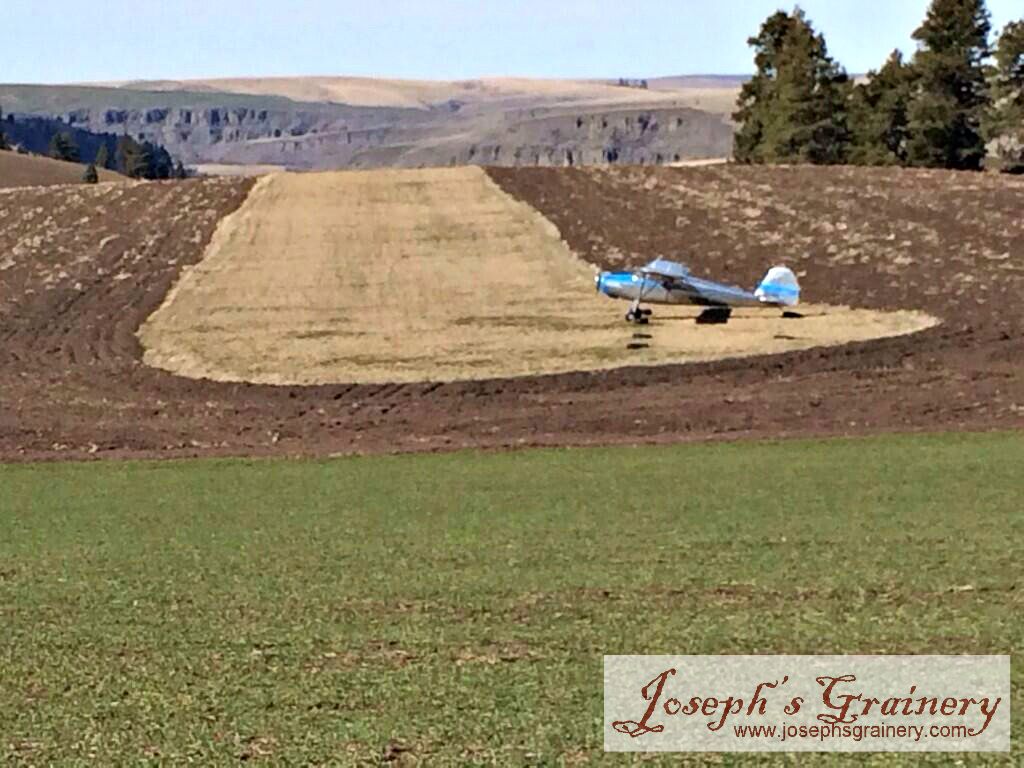
Here's a shot from the sky...as you've seen before, Bill likes to buzz from farm to farm and check the fields and the team's progress.
Then once we clean the grains thoroughly, you'll find the whole grains and legumes we're planting now on the store shelves this Fall.
Here's a shot from the sky...as you've seen before, Bill likes to buzz from farm to farm and check the fields and the team's progress.
Wednesday, November 12, 2014
Fall On The Palouse
The colors have changed to Fall around here and the last of the leaves are hanging on. Definitely a good time for Bill to take a flight in the plane and check out the fields and beautiful Fall scenery. First thing first, time to see how the winter wheat that was planted several weeks ago is doing...
Back up in the air, Bill flies over Darrel plowing the fields...
Yep, he's been busy plowing. You can see the town of Steptoe in the background, along with Steptoe Butte on the right and all of the windmills along the horizon.
And we'll leave you with this fun aerial shot of Colfax and the rolling hill of the Palouse. You can see the last of the beautiful Fall colors.
Tuesday, August 26, 2014
Monday, August 4, 2014
Wheat Harvest On The Palouse
Have you ever wondered how we harvest the Joseph's Grainery grains and legumes that you enjoy? Take a trip out into the fields and see our crew at work cutting the 2014 crop of soft white wheat in a field that over looks the Palouse River.
Tuesday, June 10, 2014
Farm Update - The Wheat Has Heads!
The Rolling Hills of the Palouse now have carpets of green growing! It's absolutely beautiful right now. In the photo above you can see the Palouse River Valley cutting it's way through the grain covered hills.
Here you can see the heads of soft white wheat emerging from the plant. The crops are looking fantastic and will be ready to harvest in mid July to early August.
Wednesday, March 19, 2014
Farm Update - The Wheat Wintered Well!
When the sun is out and shining, we know exactly where to find my Grandpa...up in the air. He claims to be checking on the crops.
He usually comes back with some great photos of the fields and an update on how things are looking, so we'll keep believing him. ;)
It looks like the Soft White Wheat wintered the harsh Palouse weather quite well! Now it's time to start growing again.
Tuesday, October 22, 2013
Farm Update - 2014 Crop Is Up!
See, we told you so. Plant a few seeds and things get out of hand. Your 2014 Joesph's Grainery Soft White Winter Wheat is on it's way, but you don't have to wait until the fall 2014 to get yours. The freshly harvested 2013 crop is in stores now.
Remember that field we showed you that was just brown dirt with rows and rows?
Thousands upon thousands of little green plants, Soft White Winter Wheat, have shot out of the ground. They'll grow a little more, and before we know it the winter snow will be here to insulate the crop from the cooler temperatures.
Tuesday, October 8, 2013
Farm Update - Fall Field Work
![]() |
| Photo by Michelle Anderson |
![]() |
| Photo by Michelle Anderson |
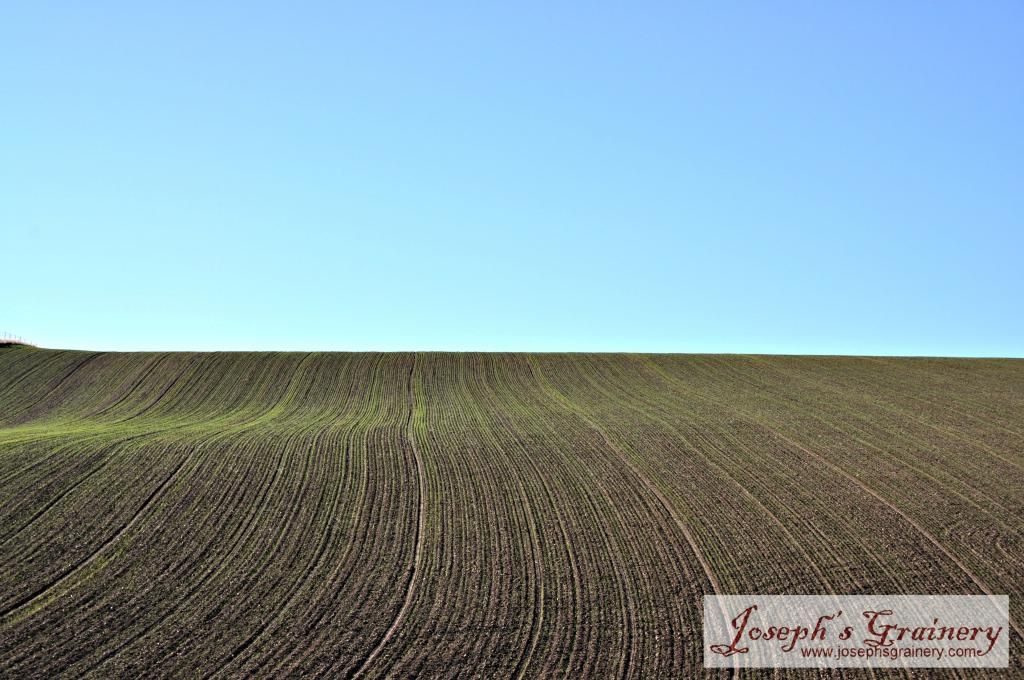
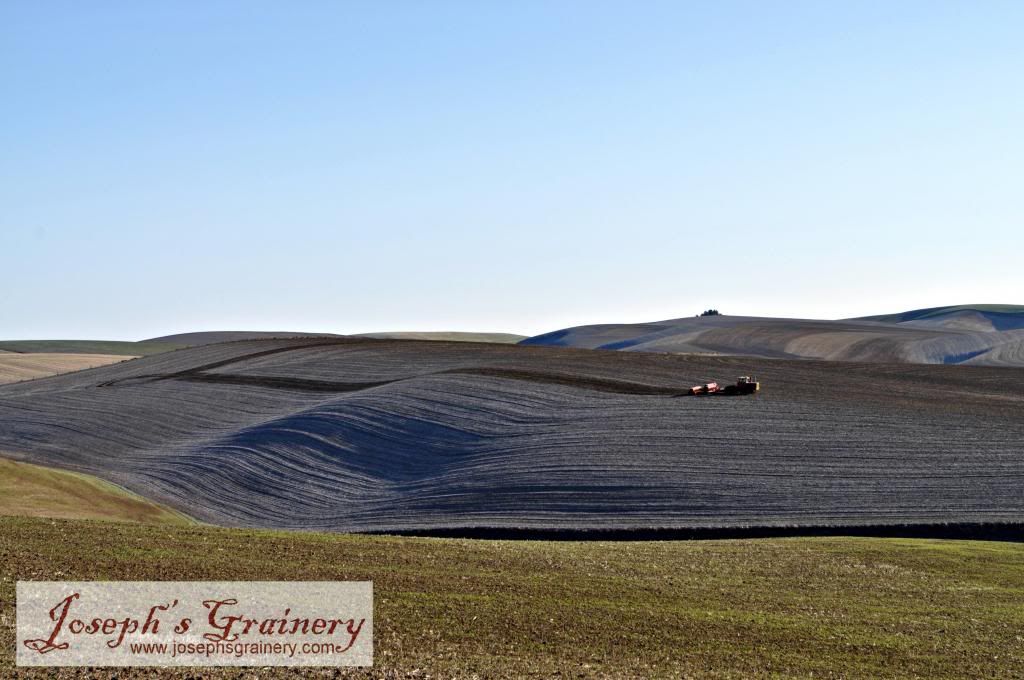
Our crew is working hard to plant the whole grains and legumes that will come From Our Farm To Your Table next year at this time.
Meanwhile, you can buy this years freshly harvested crop of Joseph's Grainery Whole Grains and Legumes at your local retailer or on our online shop.
Monday, March 25, 2013
Spring Work Has Begun!
We thought it would be fun to share a few photos of our team hard at work, planting Joseph's Grainery crops.
Doug is making his first round on a frosty morning (yes, that's frost on the ground...brrr!). Spring Barley is being planted here.
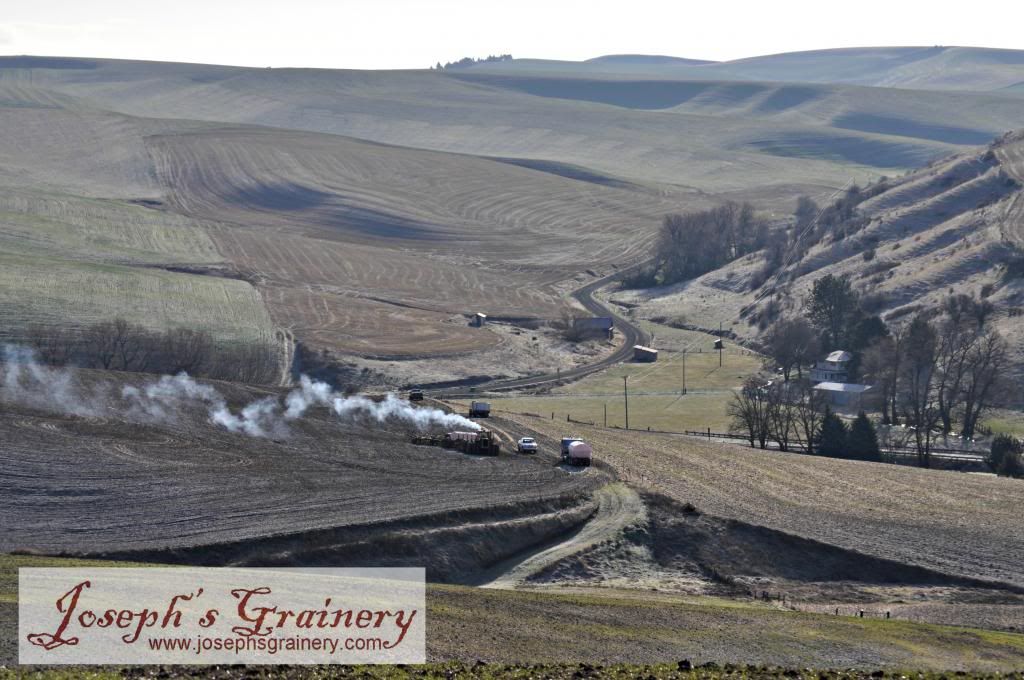
Darrel's tractor will quit smoking once it warms up a little. Spring is here on the calendar but you wouldn't know it by the thermometer.
We'll be busy in the fields for the next few weeks, so if you need to get in touch with us, e-mail is probably your best bet - just drop us a line at info@josephsgrainery.com. You can still order online as you normally would (just click on the photos to the right), and we'll get it shipped out to you!
Wednesday, September 7, 2011
Neighbors Helping Neighbors
This is what we do on the Palouse if one of our neighbors gets sick or hurt and can't get thier harvest in. This farm is near Oaksdale, Washington. The gentleman was badly hurt just before harvest in an accident with a forklift and his neighbors rallied and got the crop in.
Yes, each of those is a combine, that most likely represents a different farmer that came to help out. Pretty impressive.
Monday, May 30, 2011
Farming Update: Spring Barley
| Joseph's Grainery Barley |
We're finally getting a little bit of sunshine around here! This has been a wet Spring that has caused us significant delays in planting, but as you can see the spring crops are up and coming along nicely. What we need now is some growing weather.
Can you tell that my Grandpa likes to fly around to check his crops?
Monday, May 23, 2011
Wet Winter Wheat
| Joseph's Grainery Soft White Winter Wheat |
Tuesday, May 17, 2011
Joseph's Grainery Lentils Have Sprouted!
Our lentils were the last thing we seeded this Spring. They are just getting started even though they are a little late. Who knows...perhaps next Fall you will have some lentil & sausage soup with some of the lentils these little guys will produce.
Tuesday, April 12, 2011
Farming Update
My Grandpa, Bill, wanted me to pass this update along to all of you -
What do you do on a nice Spring day on the Palouse and it's still too wet to farm?
You go look at your wheat. Most people do this with a 4 wheeler or a pickup but this is more fun and you get a good look at everything.
We haven't turned a wheel around here yet and it's starting to get a little late. We were all done last year at this time...maybe next week, if it quits raining. It's not very often a farmer complains about rain, so I won't start just yet.
Your Josephs's Grainery Soft White Winter Wheat is coming along nicely (shown in both of the photos).
This airplane is an experimental (made with a lot of Piper Pacer parts, which are probably older than most of you). Some would say it's an experiment everytime you fly it...we just don't tell Little Joe's Grandma that! Actually it's a good little airplane that has done everything I have asked of it. Just don't ask too much.
When we start seeding the Spring crop we'll get you some more pictures.
On another note, MaMa is the featured Everyday Baker over at Sunny Bug today!
| Your Joseph's Grainery Soft White Winter Wheat is already reaching up to the brakes on the wheel of the plane! |
On another note, MaMa is the featured Everyday Baker over at Sunny Bug today!
Tuesday, December 28, 2010
Beautiful Old Barns
After all that holiday baking, MaMa and I are taking a few days off from being in the kitchen. We thought it would be fun to share a couple of the really cool old barns that can be found on the Palouse. My Grandpa took the photos of these first two.
This Barn is just East of Kalotus between Kalotus and Washtucna in Washington State.
This barn is just across the road from the previous one. You can tell they took advantage of the natural resources (rock) available when building the barn.
These are photos that the Whitman County Gazette ran awhile back of the Buri's Barn which was built in 1919 and a restoration was just completed. If you want to see some beautiful winter photos of this barn, you'll definitely want to visit Almota Roses Photography - Wendy has taken some gorgeous photographs of this old barn.
Wednesday, October 13, 2010
Farming Back In The Day
Recently an article ran in the Whitman County Gazette about the tramways that many farmers in our region used in the late 1800s to get their grains to the Snake River where they'd be loaded on a boat and shipped to their final destination.
Today, the grains that we don't sell to you, our loyal customers, we market through the more traditional way. We sell them to a broker for a market price, we then truck the grains to the river where they are loaded onto barges and shipped down river and often across the ocean. We can do this because of two great improvements: (1) roads and grades that provide our trucks access to the river and (2) a series of Dams along the Snake and Columbia Rivers that allow large barges carrying the grain to make their way downstream. Both of these weren't available to the farmers of our region back in the day.
In the late 1800s Grain Chutes, Bucket Tramways, and Rail Tramways all provided alternative transportation means for getting the farmer's grain to the river. Each of these methods were effective in transporting grain into the river canyon.
This is an example of one of the pylons and what they called a grain bucket that carried the sacks of grain down a 2,000 foot decent from the cliffs above down to the Snake River below. They work similar to a ski lift, only in reverse. They were run using gravity and the weight of each of the sacks of grain. We're told that the workers used to ride down to the river in the morning and back up at night on these small platforms. What a ride that must've been! I doubt that would've been acceptable by today's work place standards.
This photo is of my Grandpa Bill, was taken 30 some years ago, along the banks of the Snake River with one of the pylons that most likely would've carried the grains that our ancestors grew and harvested. Grandpa tells me that these pylons were burned in a fire about 15 years ago.
Once the grains made it to the river, they were loaded onto steamboats and carried down the Snake River, along the Columbia River .
This photo shows the Steamboat Almota loaded with troops during the Spanish American War of 1898, notice the sacks of grain on the front.
We've only skimmed the surface of this topic, if you're interested in learning more about the Tramways, you can read this article written by Deanna Noland.
Subscribe to:
Posts (Atom)